
News Categories
2026-08-25
Global Energy Storage Market Update 2026: Germany Storage Reform, Record Battery Shipments and Growing B2B Opportunities
The global energy storage market continues to accelerate in 2026, driven by renewable energy policy changes, rapidly growing battery shipments, expanding residential storage
demand and the increasing professionalization of the energy storage supply chain.
For energy storage manufacturers, system integrators and installers, recent developments in Germany, the United States and the global battery market point to a clear trend:
energy storage is becoming an increasingly important part of renewable energy systems, while customers are placing greater emphasis on cost efficiency, modularity,
fast delivery and supply-chain flexibility.
Germany Moves to Encourage PV-Plus-Storage
Germany is moving forward with an amendment to its Renewable Energy Act (EEG), with the government proposing to limit the feed-in power of new small and medium-sized
rooftop PV systems to 50% of their installed capacity.
The German government says the measure is intended to reduce midday electricity injection peaks, increase the responsibility of PV system operators and create stronger
incentives for the deployment of energy storage. The cabinet approved the EEG amendment and grid connection package in July 2026.
For more information, see the German Federal Ministry for Economic Affairs and Energy.
The policy direction is significant for the residential solar-plus-storage market. As direct self-consumption becomes more important, homeowners and installers may increasingly
consider batteries as a way to capture excess solar generation and shift energy usage toward periods of higher demand.
For BST Power, this development reinforces the growing opportunity in residential energy storage, AC-coupled energy storage and balcony solar storage solutions.
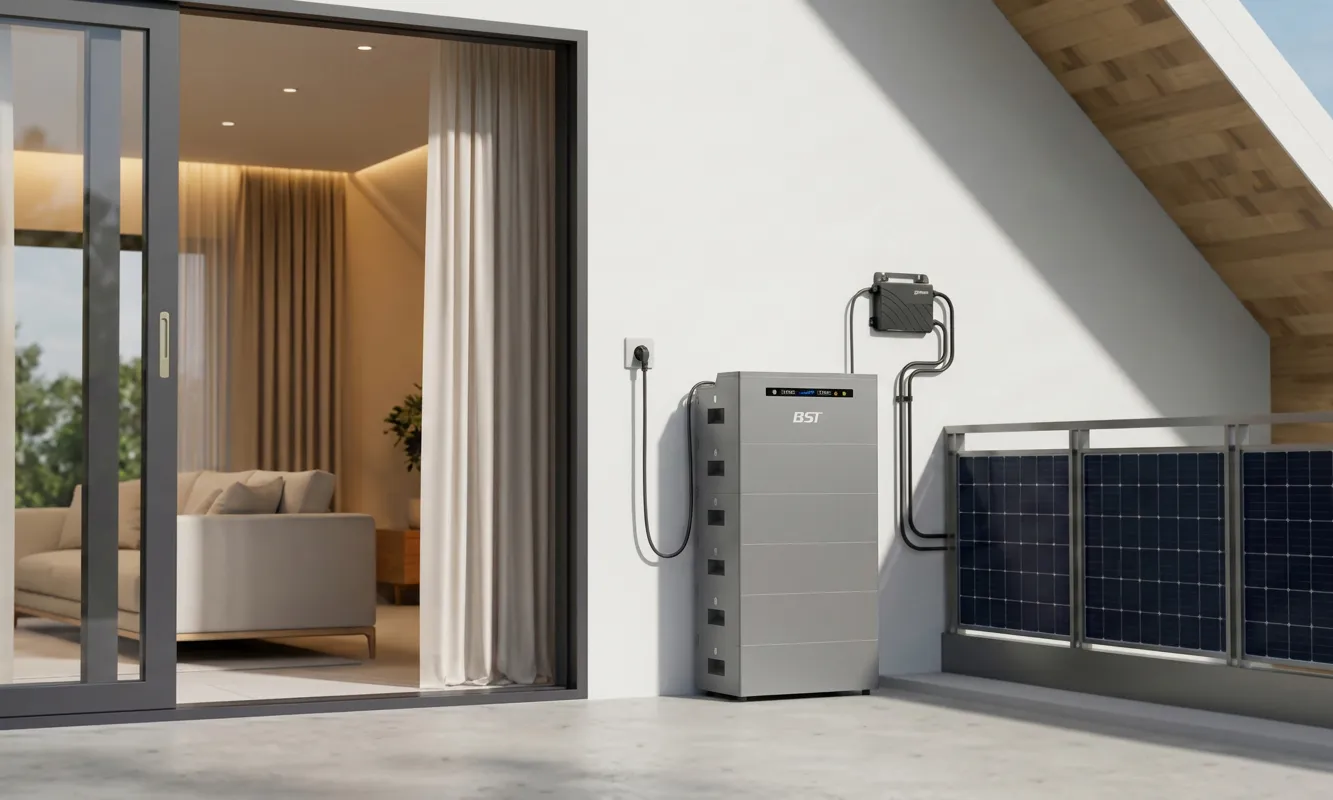
BST's 3.5kWh AC-coupled system, for example, combines 2.4kW AC output with a 3.5kWh LiFePO₄ battery and supports expansion up to 21kWh, providing a flexible option for residential PV and retrofit applications.
Global Energy Storage Cell Shipments Nearly Double in H1 2026
The global energy storage battery supply chain experienced exceptionally strong growth during the first half of 2026.
According to InfoLink Consulting, global energy storage cell shipments reached 467.84 GWh in H1 2026, up 94.76% year on year. Shipments outside China reached approximately 248.73 GWh,
representing more than half of global shipments. Meanwhile, the market concentration of the top ten suppliers declined to 82.3%, indicating increasingly intense competition among battery manufacturers.
For more information, see InfoLink Consulting's H1 2026 Energy Storage Cell Shipment Ranking.
The small-scale storage segment also showed particularly strong growth, highlighting the increasing importance of residential and distributed energy storage alongside large utility-scale projects.
For BST Power, the rapid expansion of overseas energy storage demand creates opportunities to strengthen cooperation with European, North American and other international installers, distributors and system integrators.
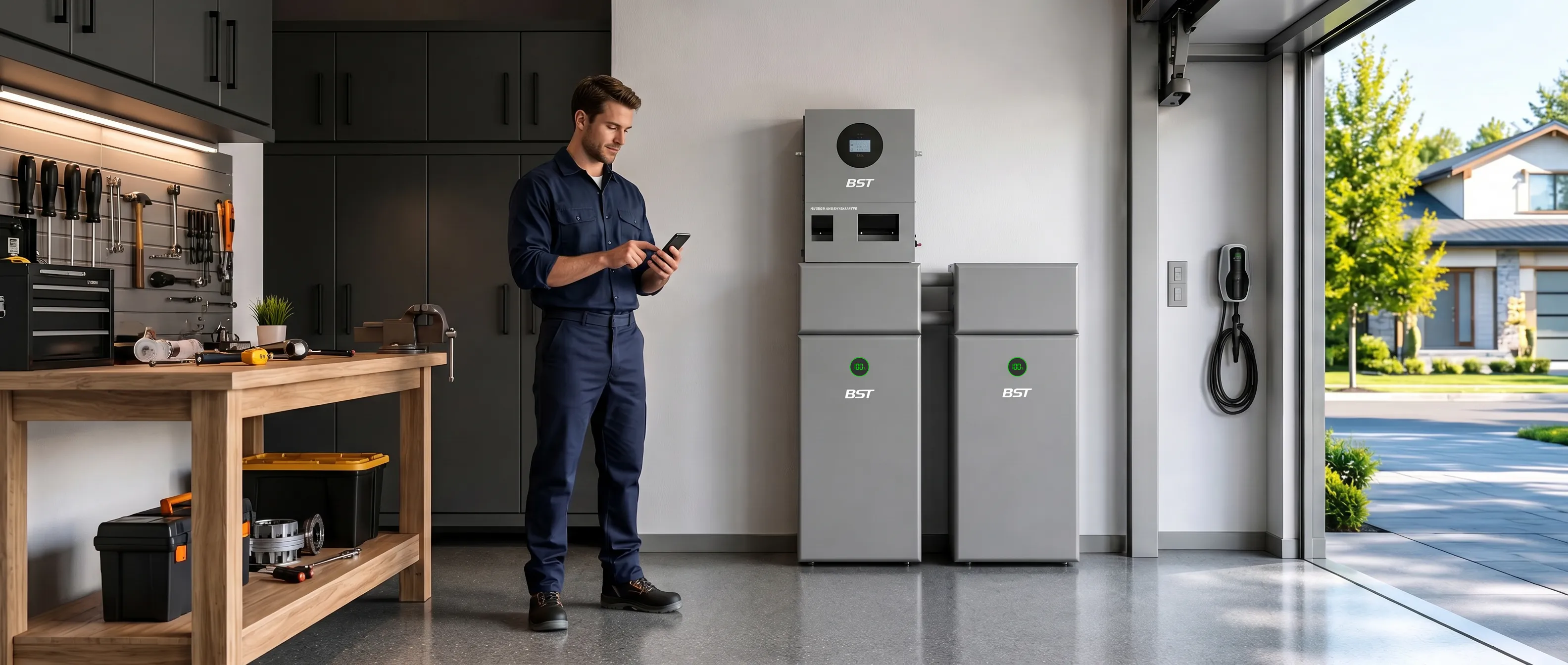
BST provides a portfolio of residential energy storage products, covering balcony ESS, hybrid ESS, AC-coupled systems and home energy storage solutions for different market requirements.
CATL Maintains Global Leadership as Competition Intensifies
The first-half market rankings also highlight the continued dominance of major Chinese battery manufacturers.
According to SNE Research data reported by CnEVPost, CATL shipped approximately 125 GWh of ESS batteries in H1 2026, representing a 27.1% global market share.
EVE Energy followed with 48 GWh, while Hithium ranked third with 46.2 GWh.
For more information, see CnEVPost's report on the H1 2026 global ESS battery market.
Although large battery manufacturers continue to dominate the market, competition among mid-tier suppliers is becoming increasingly intense. For international customers,
product customization, supply-chain responsiveness and technical support can be just as important as battery manufacturing scale.
This creates an opportunity for flexible B2B manufacturers that can provide customized products and private-label solutions rather than competing purely on battery volume.
CATL Launches Direct Online Sales Platform for Small and Medium-Sized Integrators
Another important industry development is the expansion of direct digital procurement in the energy storage sector.
CATL has launched an online energy storage marketplace targeting small and medium-sized integrators. Industry reports indicate that more than 1,800 corporate customers had registered on the platform.
The platform enables customers to select products, receive quotations and place orders through an online purchasing process, reflecting the increasing demand for faster procurement and lower purchasing barriers.
For more information, see the China Energy News report.
The development reflects a broader shift in the energy storage supply chain: small-batch purchasing, transparent pricing, shorter delivery cycles and digital procurement are becoming increasingly important to B2B customers.
For BST Power, this is an important competitive signal. As small and medium-sized integrators become an increasingly important customer segment, suppliers need to offer more than standard products.
Through its OEM/ODM energy storage solutions, BST Power supports customized residential ESS projects, private-label products, APP and cloud platform branding, packaging customization and flexible product configurations.
This model allows distributors, installers and energy solution providers to develop customized energy storage products without building their own battery manufacturing infrastructure.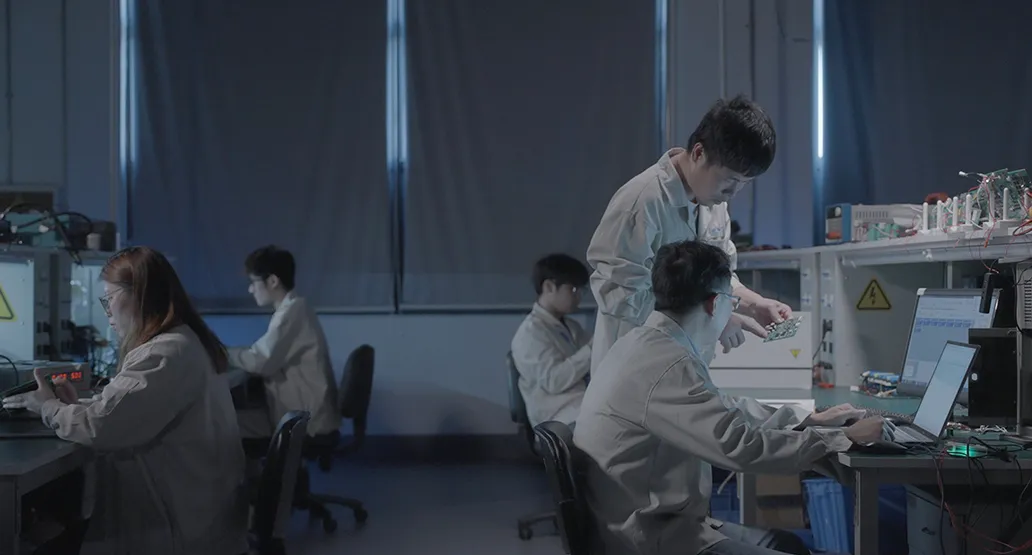
SolarEdge Expands Modular Residential Storage in Germany
Germany's residential storage market is also seeing continued product innovation.
SolarEdge launched its next-generation SolarEdge Nexis three-phase residential solar-plus-storage system in Germany in 2026.
The system combines a three-phase inverter supporting up to 20kW with modular battery storage and full-home backup functionality. The battery architecture is designed around
modular capacity expansion, while the system focuses on simplified installation and intelligent energy management.
For more information, see SolarEdge's official announcement.
The product launch demonstrates several important trends in the European residential storage market:
-
Modular battery expansion
-
Higher residential inverter power
-
Full-home backup
-
Simplified installation
-
Intelligent energy management
-
Integration with smart-home energy devices
BST Power is also developing modular residential solutions for the European market.
The 2.4kW 3.68kWh Balcony Energy Storage System with Hybrid Inverter integrates a hybrid inverter, LiFePO₄ battery, dual MPPT solar controller and intelligent energy management into one compact platform.
The system supports battery expansion up to 18.4kWh and is designed for balcony solar systems, apartment installations and residential energy storage applications.
For larger residential applications, BST's 2.4kW 3.68kWh Expandable Balcony Hybrid ESS supports expansion up to 22kWh and up to six units in parallel, providing a scalable architecture for growing household energy requirements.
U.S. Energy Storage Policy Remains Supportive, but Supply-Chain Compliance Is Increasingly Important
The United States continues to provide a significant market opportunity for energy storage, although regulatory and supply-chain requirements are becoming increasingly complex.
Under Section 48E, qualified energy storage technology can receive an investment tax credit, subject to applicable eligibility and credit-rate requirements.
For official information, see the U.S. Internal Revenue Service guidance on energy credits.
The One Big Beautiful Bill Act (OBBBA) introduced additional changes affecting clean-energy tax credits and foreign supply-chain considerations. For international energy storage
suppliers, the key takeaway is that the U.S. market remains attractive, but tax-credit eligibility, domestic-content requirements, foreign-entity restrictions and supply-chain compliance need to be carefully considered.
For BST Power and its U.S. partners, this increases the importance of transparent supply-chain documentation, product traceability and flexible OEM/ODM cooperation.
U.S.–China Trade Tensions Could Increase Battery Supply-Chain Costs
Another potential challenge for Chinese energy storage manufacturers serving the U.S. market is renewed tariff uncertainty.
Reuters reported on August 24 that the United States was considering an additional 7.5% tariff on Chinese goods, citing a Bloomberg report. The measure was reportedly being
considered ahead of a planned meeting between U.S. President Donald Trump and Chinese President Xi Jinping. Reuters noted that the report had not been independently verified.
Read the Reuters report on the potential additional tariff.
If implemented, additional tariffs could increase the landed cost of Chinese-made energy storage products in the U.S. market and place greater pressure on suppliers and distributors.
For energy storage manufacturers, this makes cost forecasting, logistics planning, supply-chain diversification and localized assembly strategies increasingly important.
BST Power's OEM/ODM energy storage model provides flexibility for customers that require customized product configurations, branding and market-specific solutions.
Europe Continues to Focus on Electricity Cost and Grid Flexibility
Europe is also continuing to address electricity costs through a combination of market, grid and policy measures.
European policy discussions have increasingly focused on wholesale electricity costs, grid charges, taxes and levies, and carbon costs. EU policy documents have also highlighted the
need to improve grid infrastructure and increase energy efficiency while maintaining the long-term decarbonization agenda.
This policy direction strengthens the strategic value of energy storage.
Battery storage can help households and businesses shift electricity consumption, increase solar self-consumption, reduce exposure to peak electricity prices and provide greater flexibility to the grid.
For European customers, therefore, the value proposition of energy storage is increasingly moving beyond simple backup power. Storage is becoming an important tool for energy cost optimization, solar utilization and energy independence.
BST Power's Residential Self-Consumption Solution is designed to help homeowners maximize solar utilization, reduce grid dependence and improve energy efficiency through intelligent energy management and flexible storage expansion.
What These Developments Mean for the Energy Storage Industry
Taken together, these developments reveal several important trends in the 2026 energy storage market.
1. Residential storage is becoming more policy-driven
Germany's latest renewable-energy reforms reinforce the role of batteries in managing rooftop PV generation and increasing solar self-consumption.
2. Overseas markets are becoming increasingly important
More than half of global H1 2026 energy storage cell shipments were destined for markets outside China, highlighting the growing importance of international demand.
3. Small and medium-sized integrators represent an important customer segment
The expansion of direct digital procurement platforms demonstrates growing demand for small-batch purchasing, transparent pricing and faster energy storage procurement.
4. Modular and installer-friendly systems are becoming increasingly important
Recent residential products increasingly focus on modular expansion, simplified installation, intelligent energy management and integrated backup functionality.
5. Supply-chain flexibility is becoming a competitive advantage
Tariff uncertainty, local-content requirements and evolving regulations mean international customers increasingly need suppliers capable of adapting their manufacturing and delivery models.
What This Means for BST Power
As the global energy storage market enters a period of rapid expansion and structural change, opportunities are emerging not only for large-scale battery manufacturers but also for flexible B2B suppliers capable of supporting different market requirements.
For installers, distributors and system integrators, the priorities are increasingly clear: competitive pricing, reliable quality, flexible customization, fast delivery and responsive technical support.
BST Power provides residential energy storage solutions for different market and application requirements, including balcony solar storage, self-consumption, backup power and hybrid energy storage.
For brands and distributors looking to build their own energy storage offering, BST also provides OEM/ODM energy storage solutions, supporting customized products, branding, APP and cloud platform integration.
Explore Energy Storage Solutions with BST Power
Whether you are an installer, distributor, EPC company, energy solution provider, wholesaler or brand owner, BST Power can support your residential energy storage business with flexible products and customized OEM/ODM cooperation.
Explore BST Power Energy Storage Products
Explore Balcony Energy Storage Solutions
Explore Residential Self-Consumption Solutions
The global energy storage market continues to accelerate in 2026, driven by renewable energy policy changes, rapidly growing battery shipments, expanding residential storage
demand and the increasing professionalization of the energy storage supply chain.
For energy storage manufacturers, system integrators and installers, recent developments in Germany, the United States and the global battery market point to a clear trend:
energy storage is becoming an increasingly important part of renewable energy systems, while customers are placing greater emphasis on cost efficiency, modularity,
fast delivery and supply-chain flexibility.
Germany Moves to Encourage PV-Plus-Storage
Germany is moving forward with an amendment to its Renewable Energy Act (EEG), with the government proposing to limit the feed-in power of new small and medium-sized
rooftop PV systems to 50% of their installed capacity.
The German government says the measure is intended to reduce midday electricity injection peaks, increase the responsibility of PV system operators and create stronger
incentives for the deployment of energy storage. The cabinet approved the EEG amendment and grid connection package in July 2026.
For more information, see the German Federal Ministry for Economic Affairs and Energy.
The policy direction is significant for the residential solar-plus-storage market. As direct self-consumption becomes more important, homeowners and installers may increasingly
consider batteries as a way to capture excess solar generation and shift energy usage toward periods of higher demand.
For BST Power, this development reinforces the growing opportunity in residential energy storage, AC-coupled energy storage and balcony solar storage solutions.
BST's 3.5kWh AC-coupled system, for example, combines 2.4kW AC output with a 3.5kWh LiFePO₄ battery and supports expansion up to 21kWh, providing a flexible option for residential PV and retrofit applications.
Global Energy Storage Cell Shipments Nearly Double in H1 2026
The global energy storage battery supply chain experienced exceptionally strong growth during the first half of 2026.
According to InfoLink Consulting, global energy storage cell shipments reached 467.84 GWh in H1 2026, up 94.76% year on year. Shipments outside China reached approximately 248.73 GWh,
representing more than half of global shipments. Meanwhile, the market concentration of the top ten suppliers declined to 82.3%, indicating increasingly intense competition among battery manufacturers.
For more information, see InfoLink Consulting's H1 2026 Energy Storage Cell Shipment Ranking.
The small-scale storage segment also showed particularly strong growth, highlighting the increasing importance of residential and distributed energy storage alongside large utility-scale projects.
For BST Power, the rapid expansion of overseas energy storage demand creates opportunities to strengthen cooperation with European, North American and other international installers, distributors and system integrators.
BST provides a portfolio of residential energy storage products, covering balcony ESS, hybrid ESS, AC-coupled systems and home energy storage solutions for different market requirements.
CATL Maintains Global Leadership as Competition Intensifies
The first-half market rankings also highlight the continued dominance of major Chinese battery manufacturers.
According to SNE Research data reported by CnEVPost, CATL shipped approximately 125 GWh of ESS batteries in H1 2026, representing a 27.1% global market share.
EVE Energy followed with 48 GWh, while Hithium ranked third with 46.2 GWh.
For more information, see CnEVPost's report on the H1 2026 global ESS battery market.
Although large battery manufacturers continue to dominate the market, competition among mid-tier suppliers is becoming increasingly intense. For international customers,
product customization, supply-chain responsiveness and technical support can be just as important as battery manufacturing scale.
This creates an opportunity for flexible B2B manufacturers that can provide customized products and private-label solutions rather than competing purely on battery volume.
CATL Launches Direct Online Sales Platform for Small and Medium-Sized Integrators
Another important industry development is the expansion of direct digital procurement in the energy storage sector.
CATL has launched an online energy storage marketplace targeting small and medium-sized integrators. Industry reports indicate that more than 1,800 corporate customers had registered on the platform.
The platform enables customers to select products, receive quotations and place orders through an online purchasing process, reflecting the increasing demand for faster procurement and lower purchasing barriers.
For more information, see the China Energy News report.
The development reflects a broader shift in the energy storage supply chain: small-batch purchasing, transparent pricing, shorter delivery cycles and digital procurement are becoming increasingly important to B2B customers.
For BST Power, this is an important competitive signal. As small and medium-sized integrators become an increasingly important customer segment, suppliers need to offer more than standard products.
Through its OEM/ODM energy storage solutions, BST Power supports customized residential ESS projects, private-label products, APP and cloud platform branding, packaging customization and flexible product configurations.
This model allows distributors, installers and energy solution providers to develop customized energy storage products without building their own battery manufacturing infrastructure.
SolarEdge Expands Modular Residential Storage in Germany
Germany's residential storage market is also seeing continued product innovation.
SolarEdge launched its next-generation SolarEdge Nexis three-phase residential solar-plus-storage system in Germany in 2026.
The system combines a three-phase inverter supporting up to 20kW with modular battery storage and full-home backup functionality. The battery architecture is designed around
modular capacity expansion, while the system focuses on simplified installation and intelligent energy management.
For more information, see SolarEdge's official announcement.
The product launch demonstrates several important trends in the European residential storage market:
-
Modular battery expansion
-
Higher residential inverter power
-
Full-home backup
-
Simplified installation
-
Intelligent energy management
-
Integration with smart-home energy devices
BST Power is also developing modular residential solutions for the European market.
The 2.4kW 3.68kWh Balcony Energy Storage System with Hybrid Inverter integrates a hybrid inverter, LiFePO₄ battery, dual MPPT solar controller and intelligent energy management into one compact platform.
The system supports battery expansion up to 18.4kWh and is designed for balcony solar systems, apartment installations and residential energy storage applications.
For larger residential applications, BST's 2.4kW 3.68kWh Expandable Balcony Hybrid ESS supports expansion up to 22kWh and up to six units in parallel, providing a scalable architecture for growing household energy requirements.
U.S. Energy Storage Policy Remains Supportive, but Supply-Chain Compliance Is Increasingly Important
The United States continues to provide a significant market opportunity for energy storage, although regulatory and supply-chain requirements are becoming increasingly complex.
Under Section 48E, qualified energy storage technology can receive an investment tax credit, subject to applicable eligibility and credit-rate requirements.
For official information, see the U.S. Internal Revenue Service guidance on energy credits.
The One Big Beautiful Bill Act (OBBBA) introduced additional changes affecting clean-energy tax credits and foreign supply-chain considerations. For international energy storage
suppliers, the key takeaway is that the U.S. market remains attractive, but tax-credit eligibility, domestic-content requirements, foreign-entity restrictions and supply-chain compliance need to be carefully considered.
For BST Power and its U.S. partners, this increases the importance of transparent supply-chain documentation, product traceability and flexible OEM/ODM cooperation.
U.S.–China Trade Tensions Could Increase Battery Supply-Chain Costs
Another potential challenge for Chinese energy storage manufacturers serving the U.S. market is renewed tariff uncertainty.
Reuters reported on August 24 that the United States was considering an additional 7.5% tariff on Chinese goods, citing a Bloomberg report. The measure was reportedly being
considered ahead of a planned meeting between U.S. President Donald Trump and Chinese President Xi Jinping. Reuters noted that the report had not been independently verified.
Read the Reuters report on the potential additional tariff.
If implemented, additional tariffs could increase the landed cost of Chinese-made energy storage products in the U.S. market and place greater pressure on suppliers and distributors.
For energy storage manufacturers, this makes cost forecasting, logistics planning, supply-chain diversification and localized assembly strategies increasingly important.
BST Power's OEM/ODM energy storage model provides flexibility for customers that require customized product configurations, branding and market-specific solutions.
Europe Continues to Focus on Electricity Cost and Grid Flexibility
Europe is also continuing to address electricity costs through a combination of market, grid and policy measures.
European policy discussions have increasingly focused on wholesale electricity costs, grid charges, taxes and levies, and carbon costs. EU policy documents have also highlighted the
need to improve grid infrastructure and increase energy efficiency while maintaining the long-term decarbonization agenda.
This policy direction strengthens the strategic value of energy storage.
Battery storage can help households and businesses shift electricity consumption, increase solar self-consumption, reduce exposure to peak electricity prices and provide greater flexibility to the grid.
For European customers, therefore, the value proposition of energy storage is increasingly moving beyond simple backup power. Storage is becoming an important tool for energy cost optimization, solar utilization and energy independence.
BST Power's Residential Self-Consumption Solution is designed to help homeowners maximize solar utilization, reduce grid dependence and improve energy efficiency through intelligent energy management and flexible storage expansion.
What These Developments Mean for the Energy Storage Industry
Taken together, these developments reveal several important trends in the 2026 energy storage market.
1. Residential storage is becoming more policy-driven
Germany's latest renewable-energy reforms reinforce the role of batteries in managing rooftop PV generation and increasing solar self-consumption.
2. Overseas markets are becoming increasingly important
More than half of global H1 2026 energy storage cell shipments were destined for markets outside China, highlighting the growing importance of international demand.
3. Small and medium-sized integrators represent an important customer segment
The expansion of direct digital procurement platforms demonstrates growing demand for small-batch purchasing, transparent pricing and faster energy storage procurement.
4. Modular and installer-friendly systems are becoming increasingly important
Recent residential products increasingly focus on modular expansion, simplified installation, intelligent energy management and integrated backup functionality.
5. Supply-chain flexibility is becoming a competitive advantage
Tariff uncertainty, local-content requirements and evolving regulations mean international customers increasingly need suppliers capable of adapting their manufacturing and delivery models.
What This Means for BST Power
As the global energy storage market enters a period of rapid expansion and structural change, opportunities are emerging not only for large-scale battery manufacturers but also for flexible B2B suppliers capable of supporting different market requirements.
For installers, distributors and system integrators, the priorities are increasingly clear: competitive pricing, reliable quality, flexible customization, fast delivery and responsive technical support.
BST Power provides residential energy storage solutions for different market and application requirements, including balcony solar storage, self-consumption, backup power and hybrid energy storage.
For brands and distributors looking to build their own energy storage offering, BST also provides OEM/ODM energy storage solutions, supporting customized products, branding, APP and cloud platform integration.
Explore Energy Storage Solutions with BST Power
Whether you are an installer, distributor, EPC company, energy solution provider, wholesaler or brand owner, BST Power can support your residential energy storage business with flexible products and customized OEM/ODM cooperation.
Explore BST Power Energy Storage Products
Explore Balcony Energy Storage Solutions
Explore Residential Self-Consumption Solutions

Copyright © 2026 BST POWER. All rights reserved.